



![7 Best Jewelry Store POS Systems [Features, Reviews, & Pricing]](https://jewel360.com/hubfs/Blog%20Featured%20Images/Jewel360/JWL%2061124%204%20Best%20Jewelry%20Store%20POS%20Systems%20BLOG.webp)


Luxe Alternatives for Jewelry Stores (2026)
If you own and manage a jewelry store, you know each piece tells a story — but the systems working behind the scenes to keep things running smoothly matter just as much as the gemstones themselves.
Your point of sale (POS) system sits at the center of it all, handling payments, inventory, repairs, and customer relationships in one place. Whichever one you choose has a direct impact on how well your store operates day to day.
In this blog, we’ll cover what to look for in a jewelry store POS system and compare seven of the best options available in 2026 — including key features, real customer reviews, and pricing.
What To Look For in a Jewelry Store POS System
Your jewelry store has operational demands that general retail software often doesn’t account for — serialized inventory, repair tracking, custom work orders, and high-value customer relationships all require careful attention over time.
Here’s what to look for when comparing POS systems:
- Cloud-based access from any device
- Repair and custom work order management
- Serialized inventory tracking
- Layaway and flexible payment support
- E-commerce integration with real-time sync
- Customer relationship management (CRM) tools with detailed shopper information and automated outreach
Keep these capabilities in mind when going into demo conversations — and rather than simply asking vendors if a feature exists, have them show you how it works in practice.
How does the system handle a customer following up on the status of a repair or trade-in at the register, for example? Is it secure? How does it manage a layaway payment that comes in months after the initial deposit?
Related Read: 10 Jewelry Store POS Features You Need for Your Business
Using real examples from your store, especially situations that may have gone wrong with your old system, is the best way to get a feel for whether a new jewelry software solution will actually be the right fit.

7 Best Jewelry Store POS Systems in 2026
With these considerations in mind, let’s take a closer look at seven of the best jewelry store POS systems, highlighting each one’s unique features, reviews and pricing.
1. Jewel360
Best for: All-in-one jewelry store management
Unlike most generic POS systems that treat jewelry like any other product category, Jewel360 is a cloud-based POS built from the ground up for jewelry stores.
It includes repair tracking with automated customer notifications, two-way Shopify sync, serialized inventory management, and a built-in website with SEO tools — all under one subscription, with no add-on fees for features that jewelers actually use every day.
With Jewel360, you get full visibility into your business from any device, whether you’re on the floor or away from the store entirely.
Key features:
- Work order and repair job tracking with a dedicated repair completion tracker
- Serial number tracking, consignment, layaway, and trade-in management
- Customer profiles with wish lists, gift registry, and purchase history
- Built-in email, SMS, and automated marketing tools
- Integrations with Jewelers Mutual, Clientbook, Affirm, QuickBooks, Shopify, and more
- Cloud-based access from any web-enabled device
“Jewel360 has helped us improve [our store’s] efficiency. The onboarding and training process was super easy, and the reporting features have been very helpful, whether you’re looking up sales or inventory reports. We would absolutely recommend Jewel360.”
— Sarah Bond Turner, CAD Designer at K Bond Jewelers
Pricing: Get a custom quote based on your store’s unique needs with our free Build and Price tool.
2. Luxe Software
Best for: CRM-focused jewelry retailers
Luxe Software is a cloud-based, jewelry-specific platform that consolidates POS, CRM, inventory, repairs, and marketing into a single system.
They advertise detailed reporting and analytics capabilities, as well as a guided data migration process where their team helps move all historical customer and inventory records from your previous system into Luxe.
Key features:
- Multilocation inventory management with location-level permissions
- Guided data migration from your previous system
- Detailed reporting and analytics dashboard
- Repair and custom work order tracking
- Targeted marketing campaigns with customer list segmentation
“Choosing Luxe software has proven to be a game-changing decision for our business. It has significantly enhanced our checkout efficiency, providing us with invaluable data insights, and ultimately elevating our overall customer experience.”
— Alex Bellman, Owner of Bellman’s Jewelers
Pricing: Luxe does not list pricing on their website — contact them directly for a quote.
3. Crystal
Best for: Smaller stores and kiosks
Crystal POS stands out for its user-friendly design and flexibility, making it an excellent choice for smaller jewelry retailers who want an easy-to-use system.
The platform helps manage repairs, serialized inventory, e-commerce, accounting, and marketing, and offers per-associate sales dashboards that give store owners visibility into individual daily and quarterly performance.
Key features:
- Serialized inventory with item-level movement and transfer history
- Repair and custom order tracking with real-time status updates
- Per-associate sales dashboards with individual daily and quarterly numbers
- Customer profiles with automated outreach and clienteling reminders
- Integrations with Shopify, BigCommerce, WooCommerce, and QuickBooks Online
“The integration to Crystal was so smooth and so easy. They had it up and running in a couple of weeks, and everyone knew exactly what to do. That made the biggest difference for us.”
— John Henne, President of Henne Jewelers
Pricing: Crystal does not list pricing on their website — contact them directly for a quote.
4. The Edge
Best for: Locally-installed jewelry POS
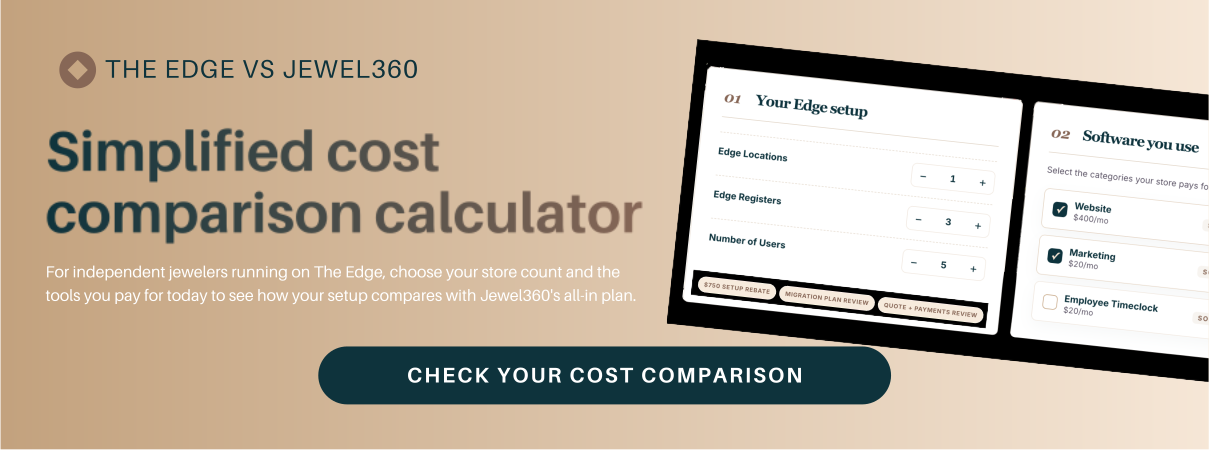
The Edge for Jewelers is a POS that runs on Windows machines rather than the cloud. Data lives on an in-store server, which may better suit stores that prefer to keep everything on-site and don't require remote access.
With a deep feature set covering repairs, custom jobs, appraisals, RFID inventory, and a full reporting suite, it’s a long-standing choice among independent jewelers. Each purchase also includes training, with introductory, advanced, and on-site options available.
Key features:
- Serialized inventory with RFID support, metal pricing, and stone tracking
- Repair, custom job, appraisal, and special order management
- Customer profiles with purchase history, wish lists, and couple accounts
- Full reporting suite covering sales, inventory performance, and staff activity
- Multi-store support with inventory transfers across locations
“I love that The Edge is constantly innovating their software, new features are constantly coming out to make the program even more complete. The Edge understands retail jewelry stores and its a perfect fit in every aspect.”
— Manager at LiriA Jewelry (G2 review)
Pricing: One-time purchase for a single store and workstation starts at $4,600, with annual support renewal at 20% of your purchase price after the first year.
5. Lightspeed
Best for: Multilocation retail management
Lightspeed is a cloud-based retail POS that jewelry stores use alongside many other retail verticals. It has solid multilocation support, strong reporting, and a broad integration ecosystem — including Mailchimp, Google Local Inventory, and built-in employee management tools.
The system does include repair tracking and serialized inventory, but they're less specialized than what you’d find in a jewelry-specific platform. It’s a better fit for stores that need retail depth and multilocation management than for those with heavy repair or custom order volume.
Key features:
- Multilocation inventory management with stock transfers across locations
- Repair and service order tracking
- Customer profiles with built-in loyalty programs
- Selling across social media platforms and online marketplaces
- Customizable reporting with sales forecasting
- Integrations with Mailchimp, Google Local Inventory, and more
“We use [Lightspeed] for both our retail and eCommerce sites, and it works great. They have a great support team and if we have any questions or have trouble with anything, their team helps use out and explains how to do it or fixes the situation ASAP.”
— Mona Mansur (Trustpilot review)
Bonus Resource: Jewel360 vs. Lightspeed
Pricing: Plans start at $89/month billed annually, with advanced tiers and monthly billing available at higher rates.
6. Shopify
Best for: E-commerce-first jewelry retailers
Shopify is a leading e-commerce platform that includes a built-in POS, inventory management, and marketing capabilities. It’s a great fit for jewelry stores focused on online sales, with integrations across sites like Instagram, TikTok, and Facebook, plus selling on Amazon, eBay, and Google Shopping.
While jewelry-specific workflows like repair tracking and serialized inventory aren’t native to the platform, third-party apps are available through their marketplace at an additional cost.
Key Features:
- Native selling across social media platforms and online marketplaces
- Synced inventory across online and in-store channels
- Website builder with built-in SEO and marketing tools
- Flexible fulfillment options including BOPIS and local delivery
- Large app marketplace for added functionality
- Built-in analytics and reporting
“What I really like about the Shopify POS is how simple and easy it is to use. You don’t need much training to get started, and everything feels quite intuitive. The best part is how smoothly it connects with the online store, so managing products and orders in one place becomes super convenient.”
— Radhika R. (G2 review)
Pricing: Plans start at $29/month billed annually, with advanced plans available at higher rates.
7. Square
Best for: New stores with minimal startup budget
While not specifically built for jewelry retail, Square is a practical starting point for brand-new stores that need to get up and running fast without a monthly software commitment.
Their free plan covers payment processing, inventory management, and a simple online store — though for stores with more specialized needs like repairs, serialized inventory, and custom orders, it may not be the best fit long-term.
Key features:
- Free plan with no monthly fee
- Basic inventory management with SKU and barcode support
- Integrated payment processing (including contactless and mobile payments)
- Basic online store included on all plans
- Sales reporting and analytics
“Square is my hub for just about everything. Over the last 5 years I've been using them, they've improved features and added on everything from marketing features to reports and an easier to use interface.”
— Abbey W. (Capterra review)
Pricing: Free plan available, with advanced tiers at $49/month and $149/month. Processing fees start at 2.6% + 15¢ per in-person transaction.
Best Jewelry Store POS Systems in 2026: Comparison Table
Here’s a quick breakdown of how each provider stacks up on essential jewelry-specific features, so you can quickly see which ones cover your store’s needs.
| Feature | Jewel360 | Luxe | Crystal | The Edge | Lightspeed | Shopify | Square |
|---|---|---|---|---|---|---|---|
| Cloud-based | ✅ | ✅ | ✅ | ❌ | ✅ | ✅ | ✅ |
| Repair & work order management | ✅ | ✅ | ✅ | ✅ | ✅ | ❌ | ❌ |
| Serialized inventory | ✅ | ✅ | ✅ | ✅ | ✅ | ⚠️ | ❌ |
| Layaway & flexible payments | ✅ | ❌ | ✅ | ✅ | ✅ | ❌ | ❌ |
| E-commerce integration | ✅ | ✅ | ✅ | ⚠️ | ✅ | ✅ | ✅ |
| CRM tools | ✅ | ✅ | ✅ | ✅ | ✅ | ⚠️ | ⚠️ |
✅ Native feature | ⚠️ Partial or requires add-on | ❌ Not available
How To Choose the Right Jewelry Store POS System
Selecting the best POS system for your jewelry store is a big decision, so take time to assess which features and capabilities matter most before heading into demo conversations. Bringing in real scenarios from your store, especially those where your old system fell short, can help narrow down your options and find the right fit.
Many stores find success with an all-in-one platform like Jewel360, consolidating inventory, payments, CRM, and marketing into a single system — rather than starting with a more generic system and then paying for costly add-ons down the line.
See how Jewel360 fits your store’s specific workflows by scheduling a personalized demo today!

With nearly a decade in point of sale (POS) software, Nick brings hands-on jewelry retail experience to his customers. Nick is particularly passionate about helping jewelry store owners simplify their inventory management processes by adopting cloud-based software. "Seeing my friends struggle with outdated POS systems drove me to create solutions that empower jewelry store owners. I want to help them manage their operations effortlessly, even when they're not in the store."