



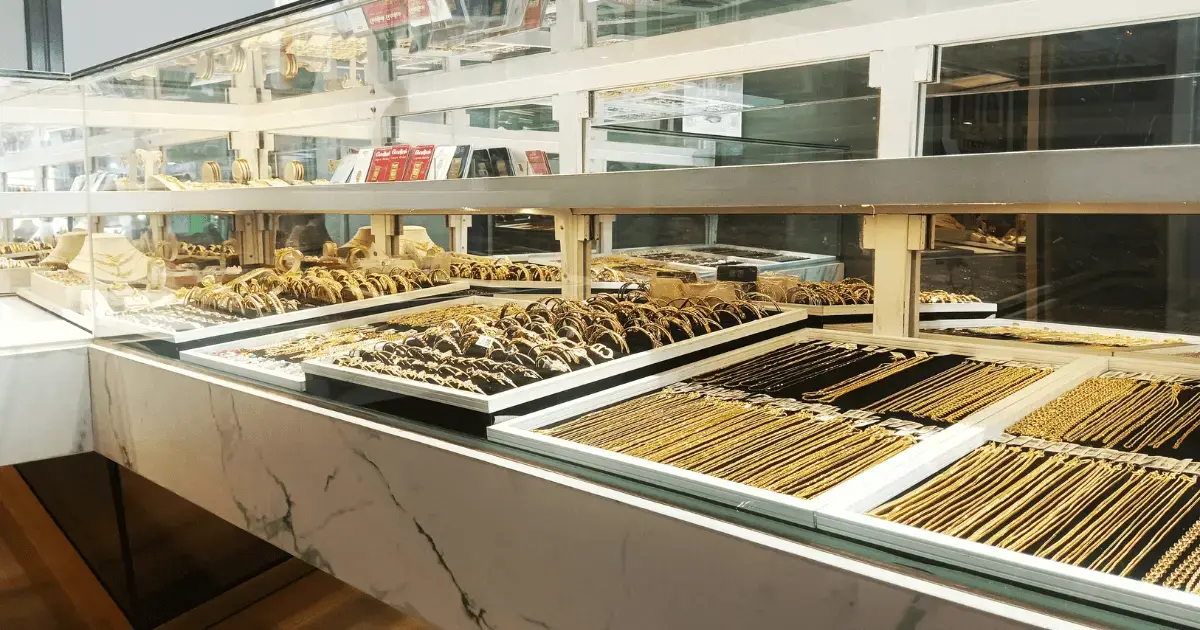


Jewelry Inventory Management: A Guide for Retail Jewelers
Most jewelry stores order metals based on last quarter's sales, assuming all metals turn at roughly the same rate. They stock heavy on white gold because customers ask about it. They order platinum and gold in similar ratios even though turnover rates differ drastically.
Then the data reveals the actual pattern. Half the platinum inventory sits for six months or longer. Silver turns fast but delivers thin margins. Gold moves steadily, but most stores still guess at the right buying mix instead of tracking real velocity.
This post breaks down which metals actually move fastest in jewelry retail — sell-through rates, days in inventory, margin potential, and customer segments for each. You'll also get practical strategies to stop guessing and start buying based on real demand.
How Each Metal Performs in Retail
Here's what the data shows about sell-through rates, margins, and customer behavior for the five metals most jewelry stores carry. These patterns determine where your buying budget should go and which metals deserve floor space.
1. Gold: Steady Volume, Predictable Turns
Gold appeals to customers who want durability and resale value. These buyers are less price-sensitive than silver shoppers but more cautious than platinum buyers. Engagement rings, everyday earrings, and layering necklaces all move at similar rates year-round with predictable seasonal bumps.
Key metrics:
- Market share: 55% of total jewelry sales
- Turnover rate: One to two times per year
- Retail margins: 50–300%, depending on design complexity
- Color breakdown: Yellow gold 43%, white gold 26%, rose gold 31%
- Karat preference: 14K represents 68% of U.S. sales, 18K accounts for 24%
The challenge with gold isn't velocity. It's variety. Customers expect options across 14K, 18K, yellow, white, and rose, which means you're managing six SKUs where silver needs one.
What to do: Run quarterly reports comparing yellow, white, and rose gold sales by category and set reorder points based on which colors move fastest in your store. Stock 14K heavier than 18K for everyday pieces, and save your 18K investment for bridal and high-end items where customers expect premium quality.
Related Read: Pricing Jewelry: 9 Strategies To Boost Sales
2. Silver: High Velocity, Accessible Price Points
Silver sells in high volume at accessible price points. Customers buy multiple pieces, shop for everyday wear rather than special occasions, and replace pieces more frequently than gold buyers. Younger customers gravitate toward trend-driven styles while older buyers want classics, but both segments shop frequently and expect fresh inventory.
Key metrics:
- Turnover rate: Best in category across all metals
- Retail margins: 30–100%, with 90% of retailers achieving 48%+
- Best price points: $100–$500 (39% of sales), under $100 (28%)
- Customer demographics: Ages 20–40 and 41–50 each represent 32% of buyers
- Growth outlook: 92% of retailers optimistic about continued silver growth
The trade-off is staff time versus margin. Your team processes more silver transactions and restocks silver displays more often than any other metal. Factor that labor into your true cost.
What to do: Set lower reorder points for silver than any other metal and reorder immediately when inventory drops below threshold. Monitor which styles sit longer than 60 days and mark them down fast. If gross margins fall below 48%, revisit your wholesale sources before adjusting retail prices.
3. White Gold: Modern Appeal, Steady Demand
White gold appeals to customers who find yellow gold too traditional. Its sleek appearance fits minimalist and modern aesthetics, and it pairs well with diamonds without competing for attention. Younger consumers shopping for contemporary styles have driven steady demand in this category.
Key metrics:
- Market share: 26% of gold jewelry sales
- Retail margins: 50–300% (similar to yellow gold)
- Customer appeal: Younger consumers preferring contemporary styles
- Maintenance requirement: Rhodium plating every one to two years
The rhodium plating that gives white gold its finish wears down over time and needs reapplication every one to two years. Setting that expectation at the point of sale (POS) prevents dissatisfaction later and builds trust.
What to do: Position white gold as a platinum alternative for budget-conscious bridal customers and stock it heavily in engagement rings and everyday minimalist pieces. Educate staff to explain rhodium plating maintenance before customers buy. Don't expect faster velocity just because the aesthetic feels modern — it turns at the same one to two-year rate as other gold alloys.
4. Rose Gold: Trend-Driven, Declining Appeal
Rose gold attracts customers who want something different from yellow or white gold, with a warm tone that works well in engagement rings and sentimental pieces. It layers well with yellow and white gold, and that versatility has kept it relevant even as standalone rose gold fashion pieces lose steam.
Key metrics:
- Market share: 31% of gold jewelry sales
- Retail margins: 50–300% (like other gold alloys)
- Trend status: Down 10% from 2017 peak
- Best applications: Engagement rings, stackable pieces, mixed-metal designs
The metal peaked in 2017 and has been declining since. Customers shopping mixed-metal stackable bands still reach for it regularly, but standalone rose gold fashion jewelry moves slower than it used to.
What to do: Stock rose gold conservatively compared to yellow and white gold, focusing inventory on engagement rings and stackable bands where it performs best. Track turn times monthly — if rose gold pieces are sitting 30+ days longer than your yellow or white gold, pull back on reorders and don't let past performance drive future buying decisions.
Platinum represents 12% of total jewelry sales globally. Platinum buyers understand metal purity and durability. They're purchasing investment pieces, not fashion jewelry, and they pay premium prices without significant pushback. The challenge is unpredictable demand — one quarter you sell four platinum rings, and the next you sell none.
Key metrics:
- Market share: 12% of jewelry sales
- 2024 performance: Up 9% year over year, after years of decline
- Turnover rate: Six to 12 months for specialty pieces (slower than all other metals)
- Retail margins: 50–300% with premium positioning power
- Customer profile: Older, affluent buyers seeking heirloom quality
The biggest mistake stores make with platinum is treating it like gold and ordering predictable quantities on a regular schedule. Platinum's rarity and prestige justify higher markups, but forecasting demand is far less reliable than with gold or silver.
What to do: Limit platinum inventory to five to seven core showcase pieces and special-order the rest when customers commit. Run monthly turn-time reports, and if a piece exceeds 12 months, mark it down aggressively and reinvest that capital into faster-moving metals.
Related Read: Metal Price Tracking: Keep Your Margins Safe With 5 Jewelry POS Features
Stop Guessing Which Metals to Buy With Jewel360
Jewel360 is a cloud-based POS system built specifically for jewelry stores. It tracks sell-through rates and days in inventory for every metal type, so you see exactly which metals move fastest in your store and which ones tie up cash. Here's what that looks like in practice:
- Set automated reorder points by metal based on actual sales velocity. When silver drops below your threshold, the system alerts you. When platinum sits past 10 months, you get flagged before it hits a full year.
- Filter inventory reports by metal, price point, color, and style. See that your $200–$400 silver hoops turn every 45 days. See that rose gold studs outsell yellow gold 3-to-1.
- Track margins by metal to find where you're making real profit. A high-velocity silver piece at 40% margin might generate more annual profit than a slow-moving platinum ring at 200%.
Schedule a demo and see how your metals are performing before your next buying decision.


With nearly a decade in point of sale (POS) software, Nick brings hands-on jewelry retail experience to his customers. Nick is particularly passionate about helping jewelry store owners simplify their inventory management processes by adopting cloud-based software. "Seeing my friends struggle with outdated POS systems drove me to create solutions that empower jewelry store owners. I want to help them manage their operations effortlessly, even when they're not in the store."