Most POS systems handle checkout.
Not many handle repairs, custom orders, consignment, and a customer who has been buying anniversary gifts from you for a decade.
We compare the best jewelry POS systems on the market so you don't have to.
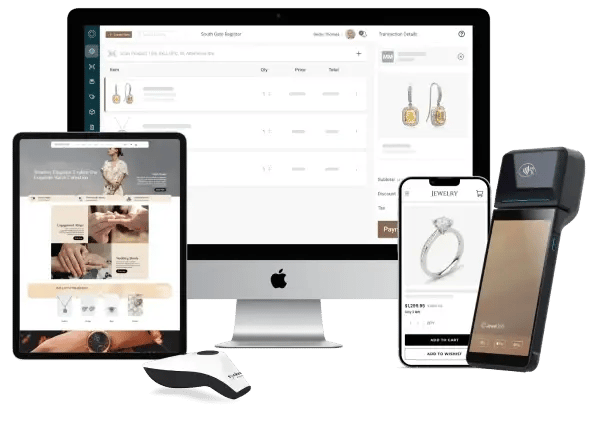
Some of these were built specifically for jewelry.
Others are general retail platforms that technically work in a jewelry store. Here's where each one actually stands.


The industry's most established jewelry POS, with 4,500+ locations and 20 years of feature depth. On-premise only — here's what that tradeoff looks like.
.webp?width=150&height=54&name=Caratiq%20(2).webp)
A newer cloud-based platform with an all-in-one pitch and published pricing from $300/mo. Here's how the feature sets and fine print compare.

Built on Salesforce with AI tools and wholesale features. See how it holds up for jewelers who need repairs and appraisals more than B2B invoicing.

A jewelry-specific POS built by a third-generation jeweler, with strong e-commerce integrations across Shopify, BigCommerce, and WooCommerce. The one gap: no Stuller integration.

A jewelry-specific POS since 1989. Deep feature set built on legacy infrastructure, not cloud native. Here's how a modern equivalent stacks up.

Building jewelry software since 1987. Deep vertical experience on a Windows-first heritage. Here's where the generational gap shows.

A Belgian jewelry POS with a single flat-fee plan and multi-currency support. Built for European retailers, not US-based jewelry stores.

A venture-backed jewelry operating system bundling POS, CRM, inventory, and repairs. Pricing isn't published, and the customer base is still early.

A general-purpose POS with no repair tracking, appraisals, or jewelry-specific inventory. Here's what that looks like in practice.

The most common starting point for new jewelry stores. Here's what happens once your inventory grows and the repair bench gets busy.

A multi-industry retail platform that can be configured for jewelry but was not built for it. Here's where the gaps show up.

A flexible retail POS used across many verticals. Repairs, appraisals, and consignment are the tests it has to pass for jewelry.


A jewelry POS geared toward large chains. See how it compares to a system built for independent jewelers.
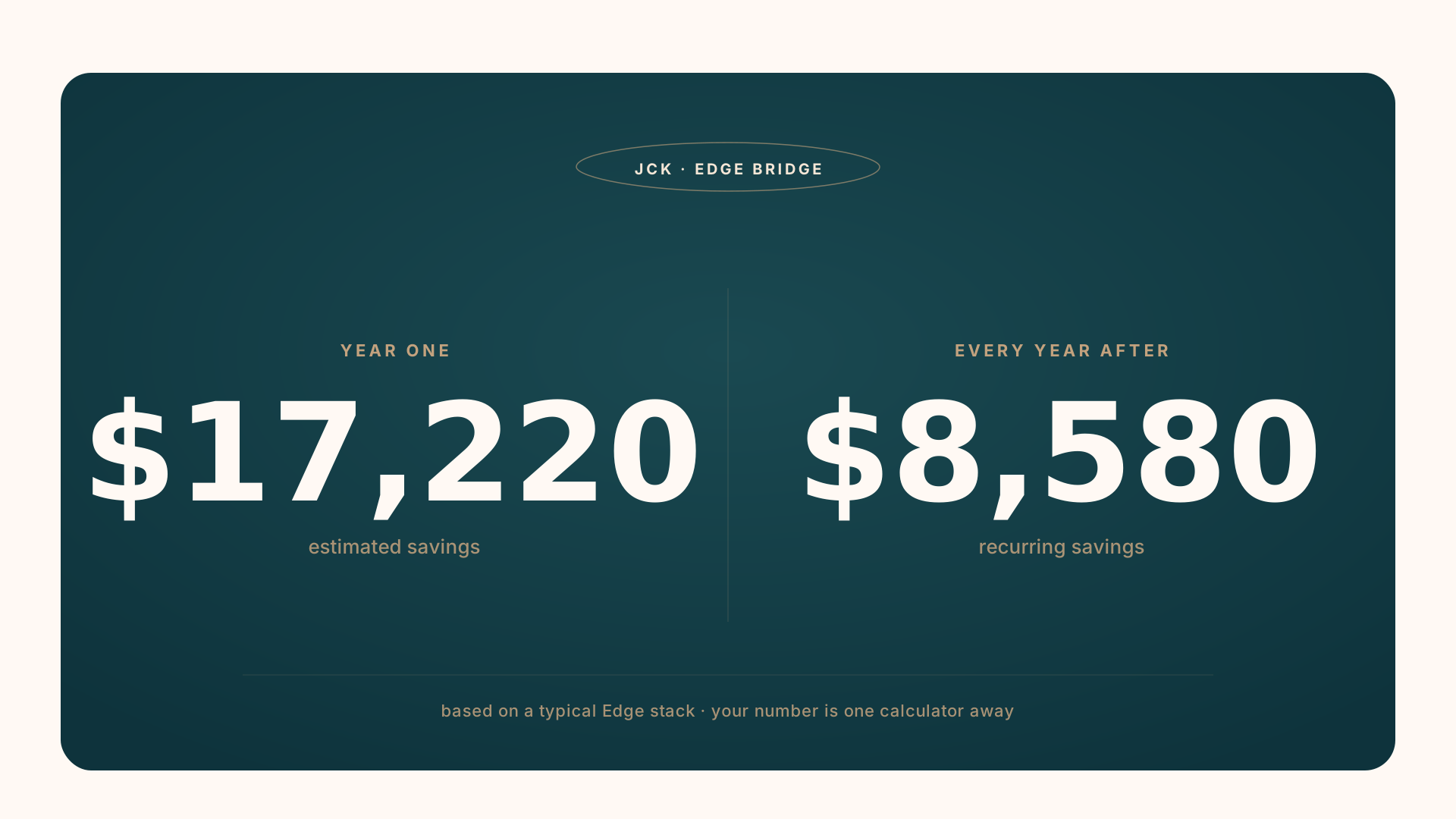
The Edge license is one line on the invoice. The website, CRM, email, scheduling, and storage that run beside it are the rest. Plug in your stack and see your year-one ledger.
Two minutes. No email needed.