





Jewelry Inventory Management: A Guide for Retail Jewelers
Jewelry Store Customer Service: 10 Essential Best Practices
9:11
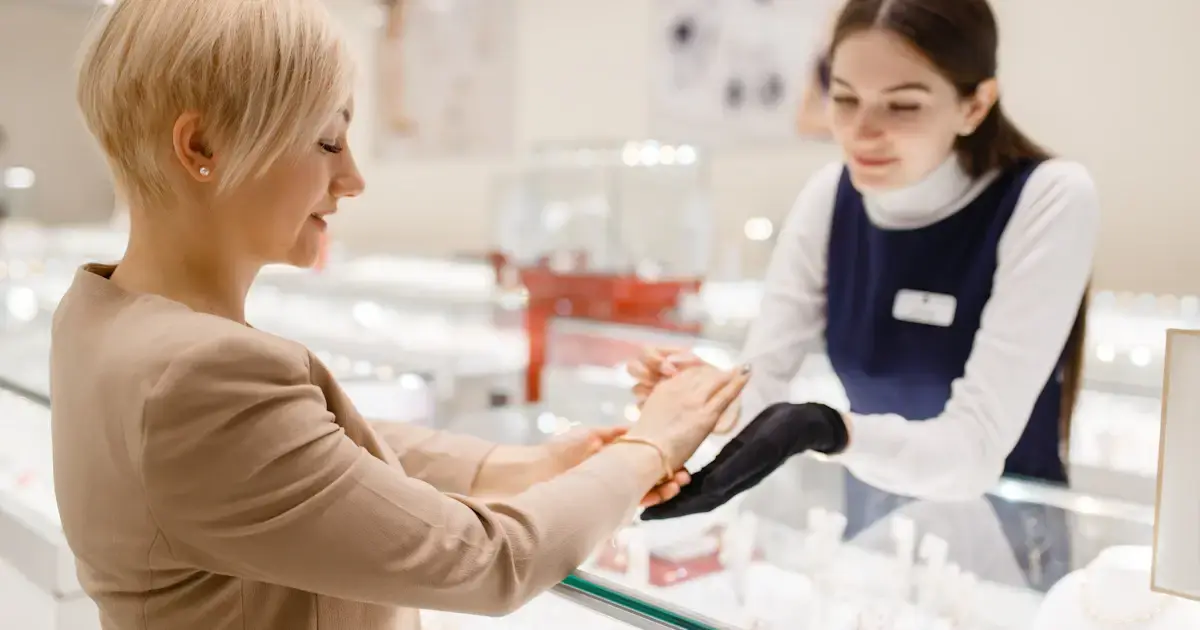
Jewelry customers want to feel that they’re in good hands.
Because jewelry items carry a heavy price tag, buyers want to know they’re making the right selection, that the item is of high quality, and that they’re getting a good deal. To feel confident in their purchase, they want to feel they can trust the person they’re buying the item from.
This is where great jewelry store customer service comes in.
Providing great customer service to each person who comes into your store can feel overwhelming — but in this blog, we offer seven simple methods to improve customer service at your jewelry store.
10 Best Practices for Improving Jewelry Store Customer Service
Even small changes to your strategy can go a long way towards building trust and loyalty among your customers.
1. Get To Know Your Customers
To give great service to your customers, you first need to understand who they are and what they’re looking for. A good place to start is to define your target market. Decide what kind of jewelry store you want to run — will it be a high-end, luxury store, or a more affordable option? Will you offer custom jewelry design? Will you offer repairs? As you determine what your store will specialize in, consider what kinds of customers are most likely to buy your products.
Ask questions like these to narrow down your target market:
- What age range is most likely to make a purchase?
- What is their income?
- Do you have more male or female customers?
As you take note of trends in your customers, you’ll develop a better understanding of how to help them.
If you notice certain customers making frequent purchases, work to remember their names and the kinds of items they tend to purchase. Think about relevant recommendations you can give them as new products come in. This will make the customer feel known and valued — and if a customer has multiple good experiences with your store, they’ll gain trust in your judgement, making them more likely to return.
Related Read: Finding Your Target Market for the Jewelry Industry
2. Offer Personalized Recommendations
As you get to know your customers as a group and individually, you’ll start to distinguish different kinds of jewelry buyers. Maybe some favor a certain type of jewelry, like rings, earrings, or necklaces. Others may prefer a certain type of gemstone, like diamonds, emeralds, or rubies. Offering recommendations based on these preferences makes customers more likely to make a purchase.
You have a lot of customers, and you can’t remember every single one on your own. Luckily, digital systems can help. Customer relationship management (CRM) software collects data on your customers, including their past purchase histories. You can pull up a customer, see what they’ve purchased in the past, and base your recommendations on this data.
3. Demonstrate Jewelry Expertise
You probably got into the jewelry industry because you’re passionate about jewelry. The process of opening up a jewelry store requires you to familiarize yourself with different types of jewelry, and the properties and values of different gemstones.
Whether you’ve been in business for 20 years or six months, you’ve gained knowledge about the industry, and you need to use that knowledge to provide great customer service.
As customers ask you questions, use your knowledge of the industry to describe what makes one item a better fit for them than another, and to emphasize positive qualities of jewelry items, like durability and craftsmanship. Be careful to give them the right amount of information to help them make a decision — oversharing industry knowledge with customers may confuse or bore them. Demonstrating your knowledge of the jewelry industry helps you gain credibility.
Remember that this principle also extends to the employees you hire, as you can’t be behind the counter 24/7. Train your employees to understand the jewelry industry like you do, so they can also give great advice, direction, and recommendations to customers.
Related Read: How To Become a Bench Jeweler in 7 Simple Steps
4. Be Clear About Pricing and Policies
A large part of great jewelry store customer service is being clear with your customers, especially about prices and store policies. When customers ask about a jewelry item, let them know what the price is, and remind them what taxes and fees apply.
Customers get frustrated when they expect one price, then are asked to pay a price that’s much higher. If a customer wants any custom jewelry modification, let them know from the outset if there will be additional fees associated with customization.
Make sure to set store policies about items like returns and warranties upfront, and make this information available to your customers in store and on your website. By making decisions about these policies early and educating employees and customers alike, you can avoid customer service issues that result from confusion and lack of communication.
The simpler these policies are, the easier they’ll be for customers to understand — and for you and your employees to stick to.
5. Offer High-Quality Remote Customer Service
Customer service extends beyond the walls of your jewelry store. You also need to help customers who reach out to you with questions and concerns over text, email, or phone. These channels allow you to remotely help customers who have questions about product care, returns, online orders, jewelry trade-ins, or other customer service issues.
There may be customers who want to talk to a representative about different jewelry items, but who don’t live close to your physical location. You can offer virtual consultations over video calls to give guidance and recommendations.
Although remote customer service over text, email, phone, or video call may feel less personal, it’s important to offer the same level of focus and help that you would in person. When you go above and beyond to help your customers, you foster loyalty, making them more likely to return and tell their friends about your business.
6. Craft the Right Atmosphere
The layout and design of your jewelry store may not seem related to customer service, but these details can have a great impact on a customer’s experience. Your store’s design should set the tone for the products and services you offer. At a jewelry store, you want to create an inviting and comfortable environment that reflects luxury and elegance.
When it comes to creating the atmosphere of your store, consider even small details. Think about furniture, display cases, lighting, and whether you’ll play music. Try to create a unified environment that emphasizes the beauty of the jewelry your store offers.
Related Read: 8 Unique Jewelry Display Ideas for Retail
7. Read and Consider Customer Feedback
To best serve your customers, you have to listen to them. Collecting reviews and feedback allows your customers to let you know what parts of your business they enjoy and what areas they think you can improve. You can talk to customers about their experience in your store, send them surveys over text or email, or ask them to leave your business reviews on sites like Google and Yelp.
Read customer survey responses and reviews and consider how customer suggestions might improve your business. If you get a similar piece of feedback repeatedly, give the suggestion extra consideration. If people say your store is too cold or your customer support over text is too slow to respond, work to improve these things to enhance customer experience.
Some advice may not be realistic to implement, but making an effort to listen to your customers helps you win their business.
8. Create Confidence In Your Products
Trust and transparency are the foundation to strong customer relationships in jewelry retail. First, be clear about pricing. Sometimes customers experience price shock when an item costs more than they expect, but you can get ahead of this by sharing the price earlier rather than later.
When this happens, acknowledge their reaction, but emphasize the price as an investment. Let them know everything that comes with their purchase — including any cleanings, sizing, or limited repairs. You can also suggest a similar item at a lower price point, like gold-plated jewelry in place of solid gold, or a payment plan with monthly installments.
Another way to demonstrate the value of jewelry products is to explain sourcing and materials. When you provide detailed information about the origins of gemstones and metals, as well as the manufacturing processes, you instill confidence in the authenticity and ethical integrity of your products.
Certifications reinforce trust in the quality of products, too. Assuring customers of the craftsmanship and durability of your jewelry helps to alleviate any concerns.
Pro tip: As you explain jewelry information (like diamond certifications), remember there’s a fine line between educating and boring a customer. Define key terms like “cut,” “color,” and “clarity,” but avoid spending too much time on irrelevant information that causes them to lose interest.
Keep these conversations simple. As you compare options, you might say something like, “Both of these diamonds are the same color and size, but this one has a better cut grade, which is why it looks brighter across the room.”
9. Build Long-Term Customer Relationships
Long-term customer relationships are a must for continuous growth. One effective way to nurture relationships is to follow up with customers after their purchase. Sending a personalized thank-you note shows gratitude for their business and gives you an opportunity to address any concerns.
Jewelry store loyalty programs and referral incentives are powerful strategies to incentivize repeat business. Overall, 64% of loyalty program members spend more to maximize their earnings.
Pro tip: Some customers won’t be ready to buy a piece of jewelry at first. Rather than try to convince them or push them into it, give them time to think about it — this reduces pressure and helps you to create a long-term customer relationship.
Consider a 48-hour hold. Send them a photo of the item with its specifications and price, and give them time to consider their purchase. Be sure to follow up at the end of hold, and offer to extend it if needed.
10. Leverage Customer Feedback
Feedback management is a powerful tool for enhancing the customer experience in your jewelry store. Encouraging customers to give feedback through surveys, reviews, or suggestion boxes creates a channel for open communication and helps you better serve them.
Analyzing feedback allows you to pinpoint specific pain points and take steps to address them. Whether it’s improving the purchasing process, expanding product selection, or adjusting staff training, implementing changes based on customer feedback ensures your jewelry store is responsive to the needs of its clients.
Pro tip: If you want to get more reviews, send each customer a text message with a link to write you a review after checkout. Read these reviews often. If a customer has a great experience, send them a thank-you.
Offer Outstanding Jewelry Store Customer Service With Jewel360
In the jewelry business, great customer service helps you differentiate yourself from the competition and build a network of loyal customers. There are small changes you can make to start improving your customers’ experience, including offering personalized recommendations, sharing your expertise, offering remote customer service, and perfecting your store’s atmosphere.
A good place to start this process is by listening to customers’ feedback. Determine which aspects of your jewelry store are commonly commented on, both positive and negative. Work to maintain your store’s best qualities and improve its weaknesses. As you listen to your customers’ comments, you’ll perfect your jewelry store’s customer service, leading to more customers and greater sales.
You can streamline your customer service process — and the rest of your jewelry store’s operations — with a solid point of sale (POS) system. Jewel360 is a cloud-based POS platform that has features to help you run all aspects of your business, including customer communications, e-commerce, marketing tools, and more.
To see the difference Jewel360 can make for your store, schedule a demo today!
Tags:

Nick Gurney
February 4, 2025
February 4, 2025
With nearly a decade in point of sale (POS) software, Nick brings hands-on jewelry retail experience to his customers. Nick is particularly passionate about helping jewelry store owners simplify their inventory management processes by adopting cloud-based software. "Seeing my friends struggle with outdated POS systems drove me to create solutions that empower jewelry store owners. I want to help them manage their operations effortlessly, even when they're not in the store."